AUTHOR

POSITION

TIME

LOCATION

SOUKITA,

44.7232° N, 11.1018° E

04.03.26, 12:02PM

RAVARINO, IT

LOOKING BACK AT STONE ISLAND MARINA

From early marine codes to present-day fabrication, Marina remains one of Stone Island’s clearest studies in utility as image.

Stone Island began in 1982 with a fabric experiment. Massimo Osti took a rigid military truck tarpaulin, softened it through stone washing, and turned it into Tela Stella, the cloth that gave the brand both its name and its method: start with material, then build the garment around it. From the beginning, Stone Island was less interested in fashion as image than in clothing as process: dye, treatment, finish, protection, use. 


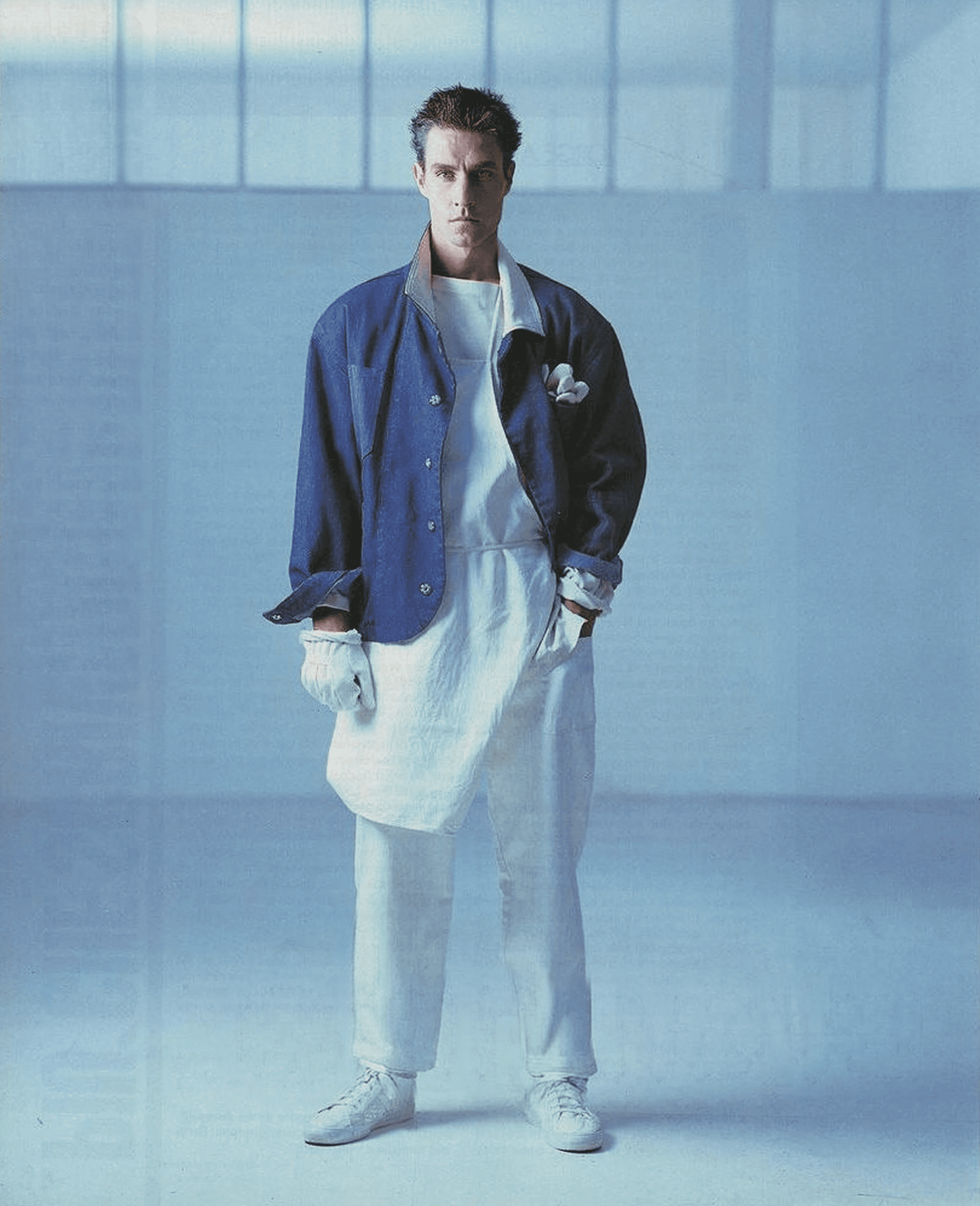
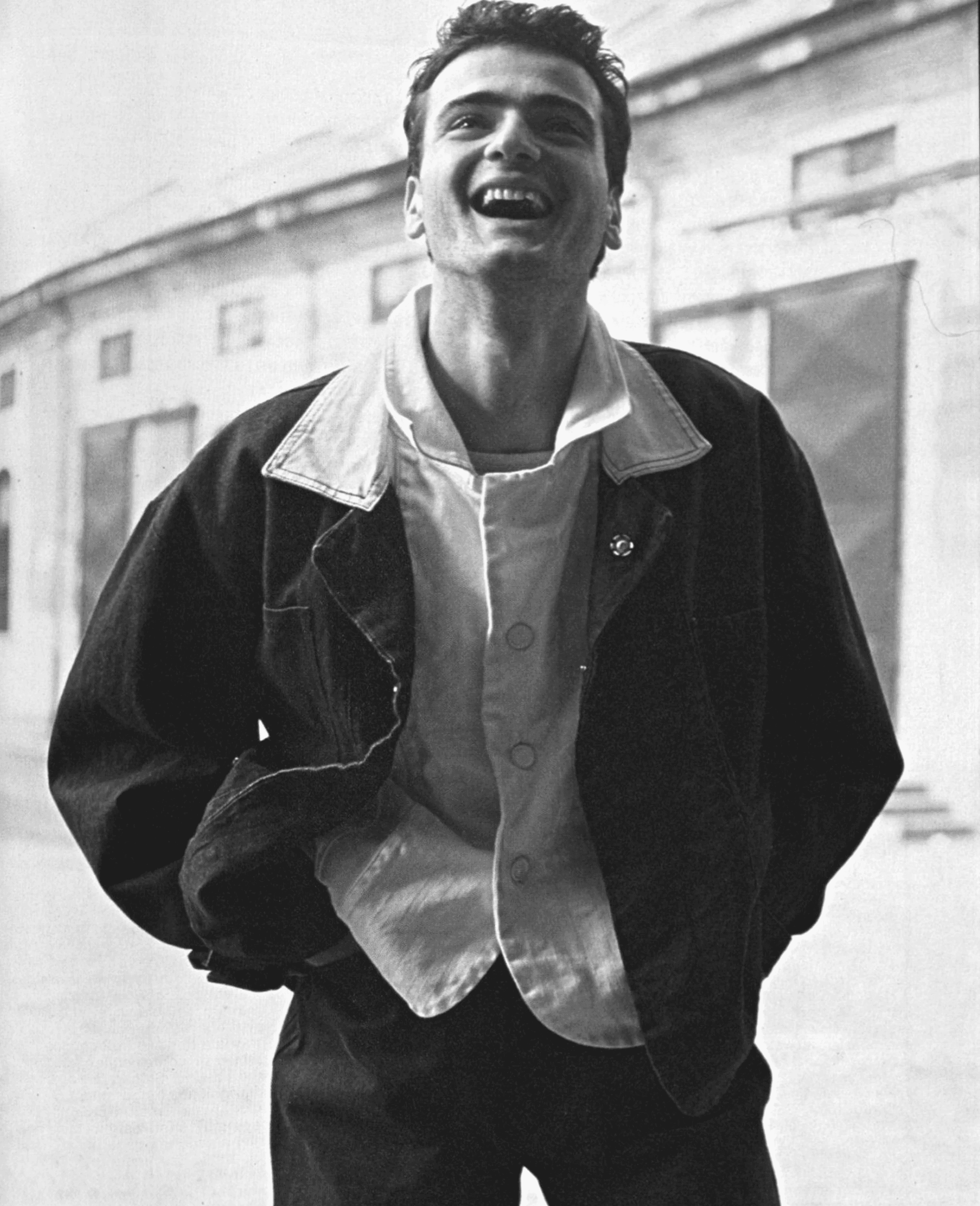
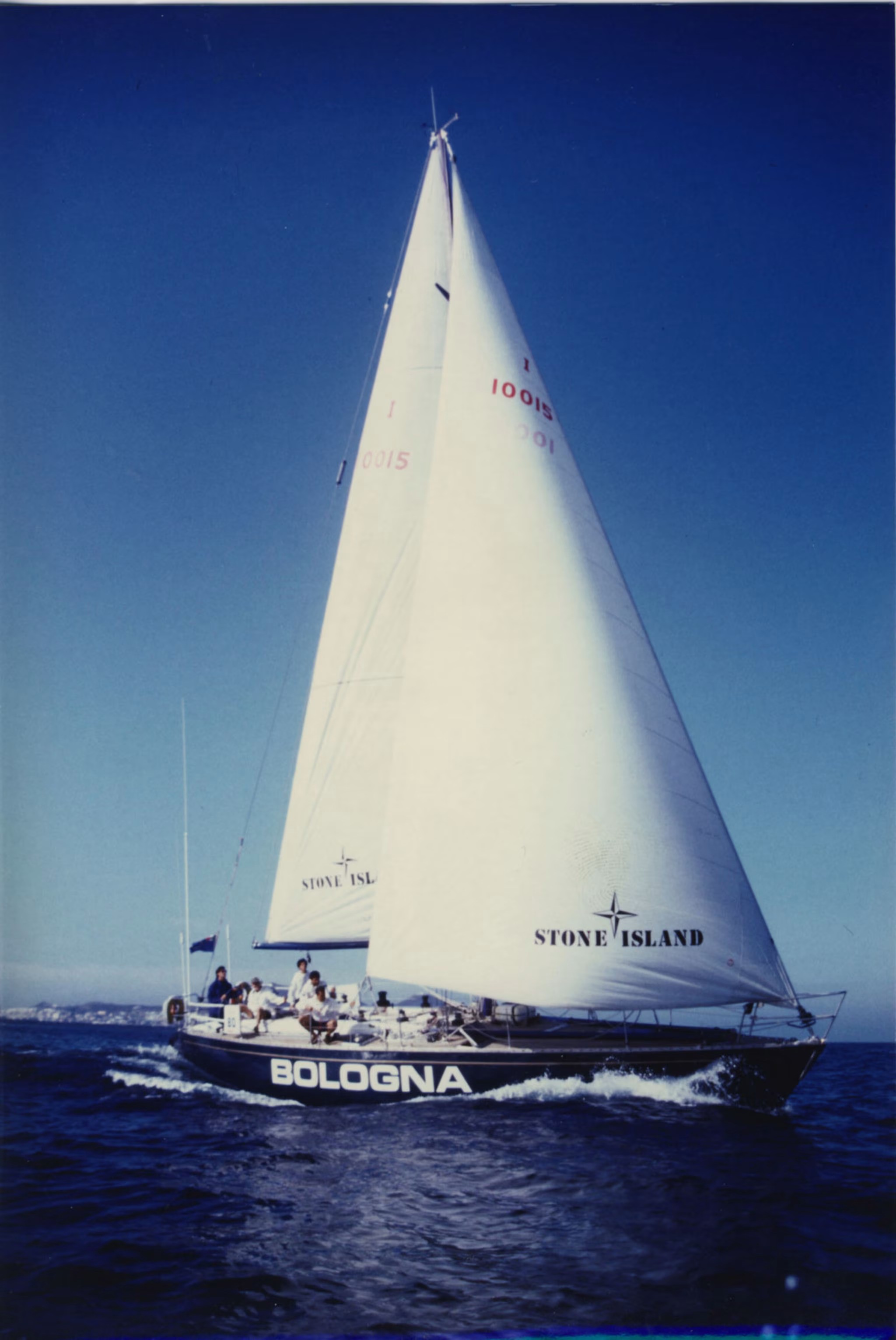
Marina emerged almost immediately within that world. By 1984, it was already visible in period print imagery such as L’Uomo Vogue and Per Lui, where its identity appeared in recognisable form: marine striping, sailing jackets, protective hoods, rubberised details, and outerwear that felt shaped by exposure rather than styling. If Stone Island as a whole moved across military and industrial research, Marina narrowed that research toward the sea. It was not a separate idea from the brand. It was one of its clearest applications.

01 Vogue L'Uomo, 1984.

02 Per Lui, Spring/Summer 1984

Marina was never just “nautical” in a graphic sense. It was nautical in construction. The line translated marine conditions into garment form: wind, salt, movement, moisture. Its details were practical before they were symbolic. Foldaway hoods, weather-minded shells, deck-style fastenings, bellows pockets, and rope- or rubber-adjacent hardware gave Marina its shape. The stripe and the wordmark became its most visible signatures, but the deeper continuity was structural: the garments looked the way they did because they were designed around use. As Agata Osti recalled, “Whenever he was making a garment, he’d ask himself how it was going to be used and what functions it needed to serve.”

"Our approach is closer to industrial design than fashion."

— Carlo Rivetti

Claudia Bergamini, Stone Island Garment Dyed Jacket Process, 2016.

By the late 1980s and early 1990s, Stone Island’s material research had become more ambitious, and Marina evolved with it. The line’s maritime codes remained intact, but the fabrics and finishes grew more experimental, introducing reflective jackets in Spring/Summer 1992, with that trajectory continuing into the 2010s with a 2013 release centered on luminescent treatment with glow-based surface technology.


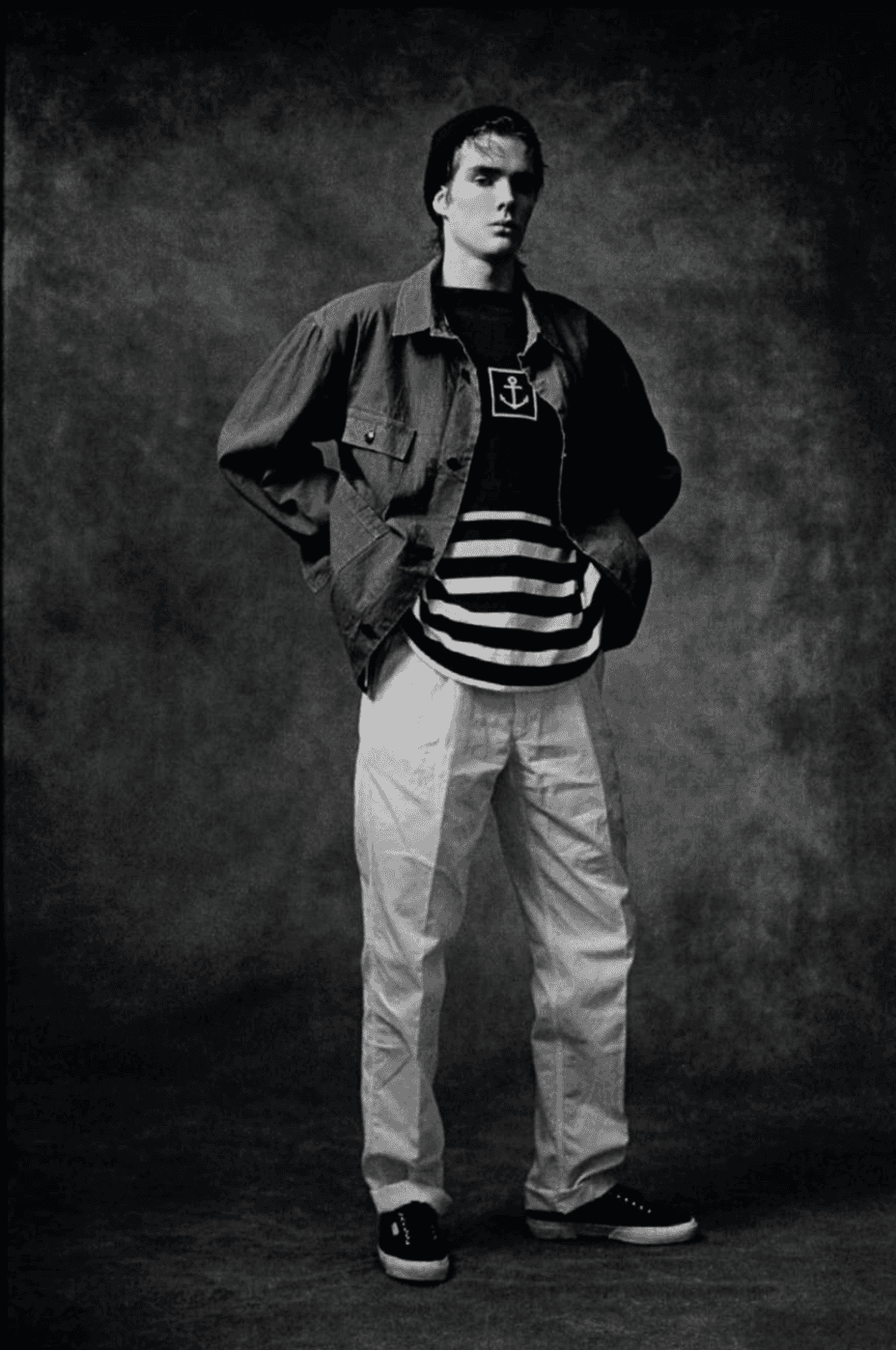
When Stone Island returned again to Marina in Spring/Summer 2019, the line’s 1980s identity was brought back into focus with the horizontal stripe code returning from the archive.

Per Lui, March 1987

Boketto in Toronto sits within that structure. Developed incrementally by Soroush Mansoori, the project began with resale, moved into a showroom, and later into a permanent space that now holds a distinct place within the city’s archival community. Both the physical store and the digital platform have undergone revision over time, forming an open record that remains responsive to its own development.


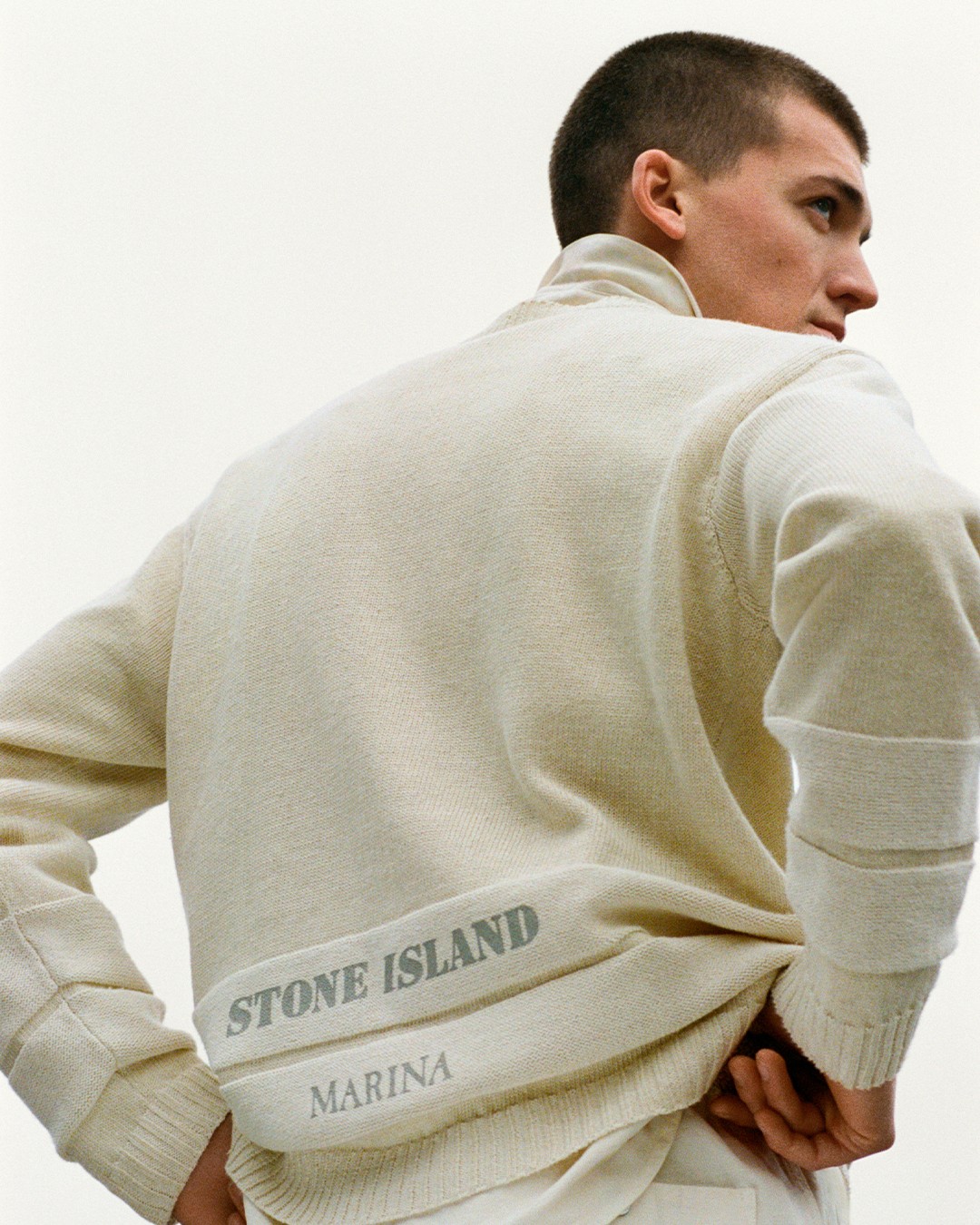
The shoot produced with Boketto was built around a selection of pieces from the current assortment. Rather than isolating individual products, the images place them within Boketto’s wider sensibility, where selection, sequencing, and context function as part of the boutique’s authorship. The garments remain central, but they do not appear alone. They are shown as part of a larger visual logic, one shaped by framing, atmosphere, and relation.

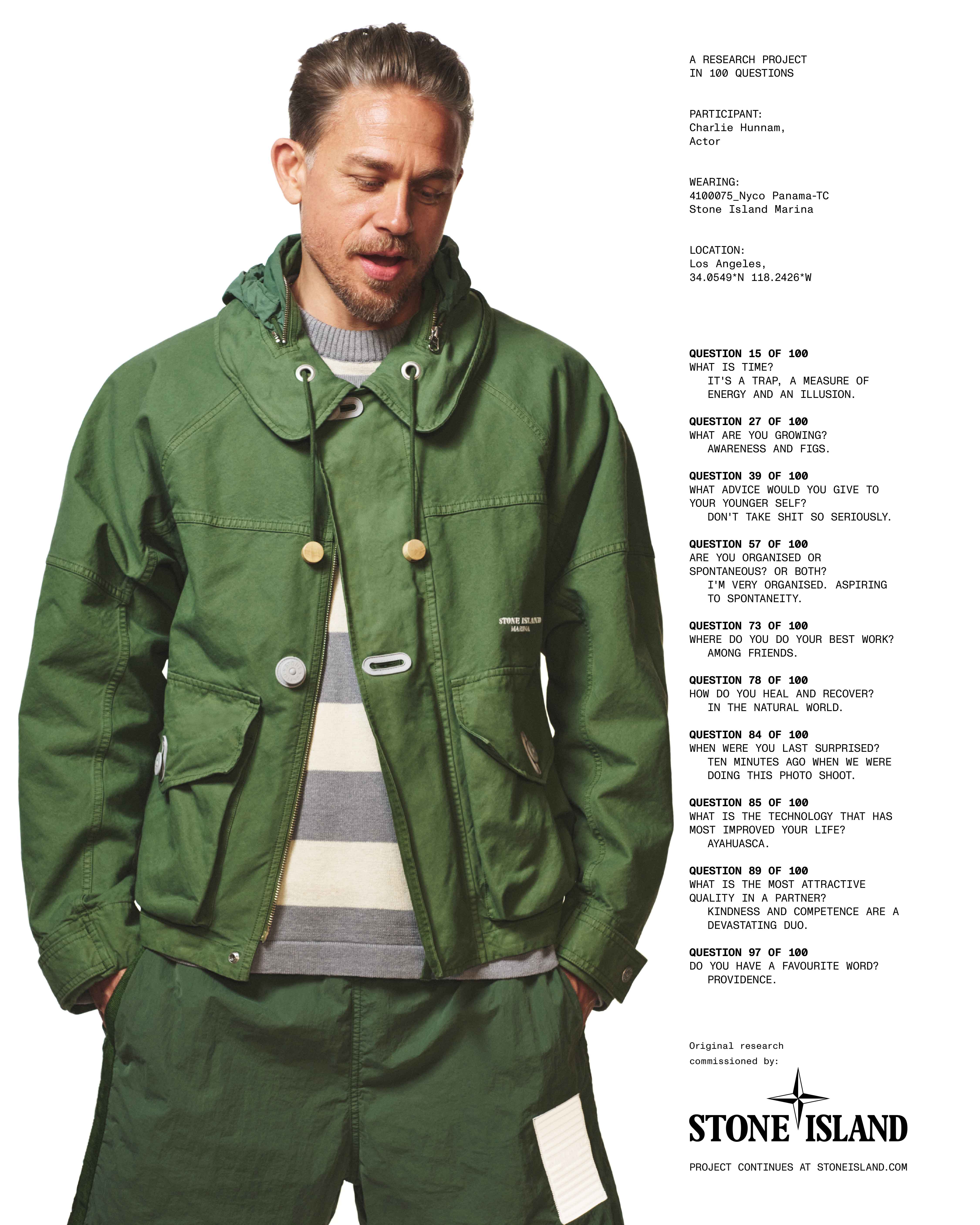
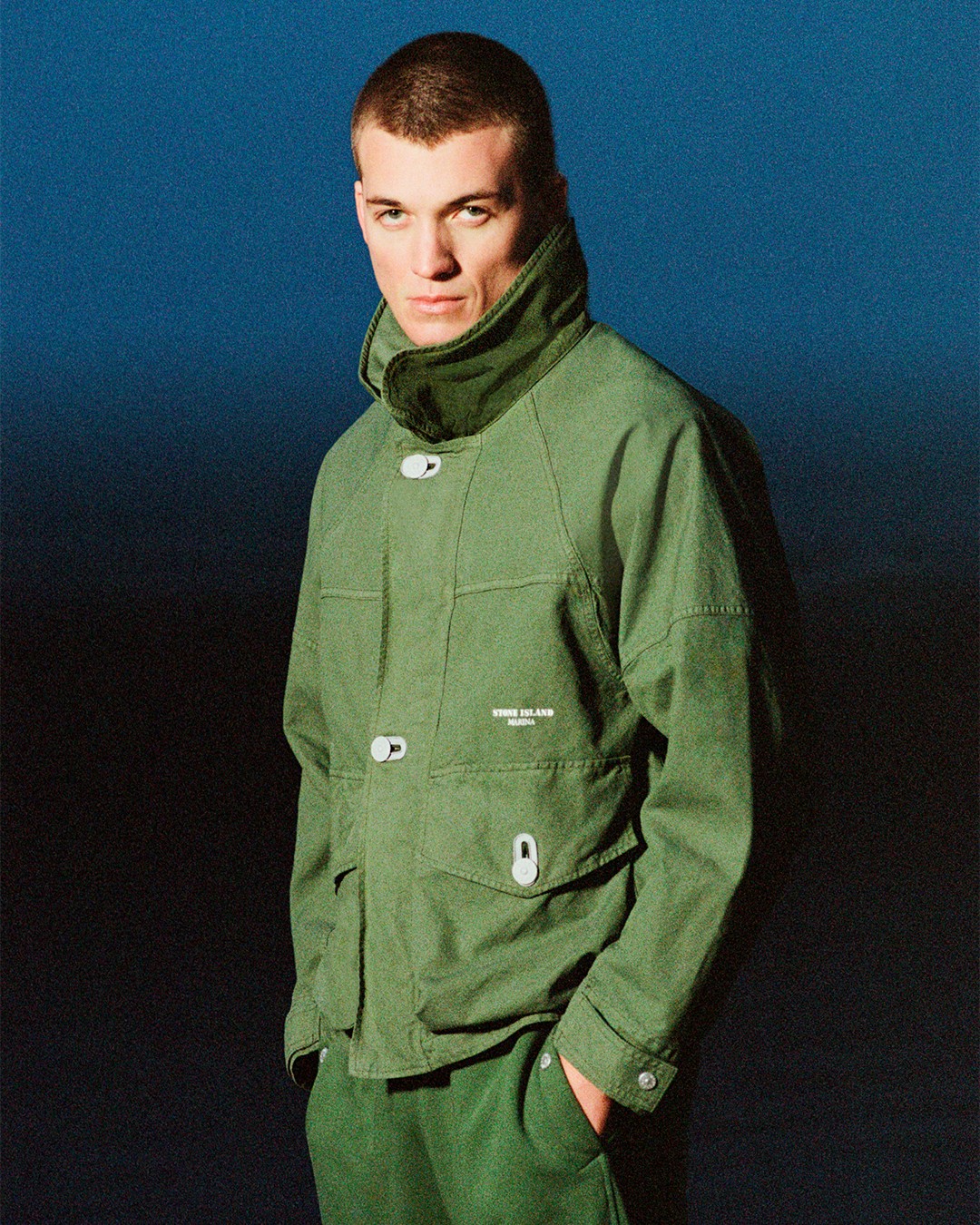
Today, the Spring/Summer 2026 jacket is legible to the same standard. The current launch centers 4100075 NYCO PANAMA-TC_S.I. MARINA, worn by Charlie Hunnam. On paper, the garment is exacting. It uses a nylon-cotton panama weave, a structure that gives the surface body and irregularity. It is then garment dyed using a double-dye recipe designed to intensify color and draw out the textural differences of the mixed-fiber cloth, before being finished with an anti-drop treatment. Its construction carries Marina’s earlier logic forward with unusual clarity: foldaway hood, wooden aglets, rubberised closures, raglan sleeves, bellows hand pockets with triangular flaps, adjustable cuffs, and a two-way zip under placket. In Stone Island’s own framing: “Nautical icons, reconfigured for today.”

Wooden aglets, rubberized fastenings, a hood that zips into the collar: the new Marina jacket keeps its history close to the body. Those details point back to the line’s early sailing vocabulary, but the fabric keeps the piece in the present.


Seen chronologically, Marina has remained rarely consistent. From its early print appearances in 1984, the line was already defining itself through maritime outerwear, technical utility, and a distinct graphic language. Later versions changed the surface: reflective, luminous, lighter, more experimental, without abandoning the premise. The Spring/Summer 2026 jacket follows the same path. It does not revive Marina as nostalgia. It returns to the line’s original proposition and makes it current again.

AUTHOR

POSITION

TIME

LOCATION

SOUKITA,

44.7232° N, 11.1018° E

04.03.26, 12:02PM

RAVARINO, IT

LOOKING BACK AT STONE ISLAND MARINA

From early marine codes to present-day fabrication, Marina remains one of Stone Island’s clearest studies in utility as image.

Stone Island began in 1982 with a fabric experiment. Massimo Osti took a rigid military truck tarpaulin, softened it through stone washing, and turned it into Tela Stella, the cloth that gave the brand both its name and its method: start with material, then build the garment around it. From the beginning, Stone Island was less interested in fashion as image than in clothing as process: dye, treatment, finish, protection, use. 


Marina emerged almost immediately within that world. By 1984, it was already visible in period print imagery such as L’Uomo Vogue and Per Lui, where its identity appeared in recognisable form: marine striping, sailing jackets, protective hoods, rubberised details, and outerwear that felt shaped by exposure rather than styling. If Stone Island as a whole moved across military and industrial research, Marina narrowed that research toward the sea. It was not a separate idea from the brand. It was one of its clearest applications.

01 Vogue L'Uomo, 1984.

02 Per Lui, Spring/Summer 1984

Marina was never just “nautical” in a graphic sense. It was nautical in construction. The line translated marine conditions into garment form: wind, salt, movement, moisture. Its details were practical before they were symbolic. Foldaway hoods, weather-minded shells, deck-style fastenings, bellows pockets, and rope- or rubber-adjacent hardware gave Marina its shape. The stripe and the wordmark became its most visible signatures, but the deeper continuity was structural: the garments looked the way they did because they were designed around use. As Agata Osti recalled, “Whenever he was making a garment, he’d ask himself how it was going to be used and what functions it needed to serve.”

"Our approach is closer to industrial design than fashion."

— Carlo Rivetti

Claudia Bergamini, Stone Island Garment Dyed Jacket Process, 2016.

By the late 1980s and early 1990s, Stone Island’s material research had become more ambitious, and Marina evolved with it. The line’s maritime codes remained intact, but the fabrics and finishes grew more experimental, introducing reflective jackets in Spring/Summer 1992, with that trajectory continuing into the 2010s with a 2013 release centered on luminescent treatment with glow-based surface technology.


When Stone Island returned again to Marina in Spring/Summer 2019, the line’s 1980s identity was brought back into focus with the horizontal stripe code returning from the archive.

Per Lui, March 1987

Boketto in Toronto sits within that structure. Developed incrementally by Soroush Mansoori, the project began with resale, moved into a showroom, and later into a permanent space that now holds a distinct place within the city’s archival community. Both the physical store and the digital platform have undergone revision over time, forming an open record that remains responsive to its own development.


The shoot produced with Boketto was built around a selection of pieces from the current assortment. Rather than isolating individual products, the images place them within Boketto’s wider sensibility, where selection, sequencing, and context function as part of the boutique’s authorship. The garments remain central, but they do not appear alone. They are shown as part of a larger visual logic, one shaped by framing, atmosphere, and relation.

Today, the Spring/Summer 2026 jacket is legible to the same standard. The current launch centers 4100075 NYCO PANAMA-TC_S.I. MARINA, worn by Charlie Hunnam. On paper, the garment is exacting. It uses a nylon-cotton panama weave, a structure that gives the surface body and irregularity. It is then garment dyed using a double-dye recipe designed to intensify color and draw out the textural differences of the mixed-fiber cloth, before being finished with an anti-drop treatment. Its construction carries Marina’s earlier logic forward with unusual clarity: foldaway hood, wooden aglets, rubberised closures, raglan sleeves, bellows hand pockets with triangular flaps, adjustable cuffs, and a two-way zip under placket. In Stone Island’s own framing: “Nautical icons, reconfigured for today.”

Wooden aglets, rubberized fastenings, a hood that zips into the collar: the new Marina jacket keeps its history close to the body. Those details point back to the line’s early sailing vocabulary, but the fabric keeps the piece in the present.


Seen chronologically, Marina has remained rarely consistent. From its early print appearances in 1984, the line was already defining itself through maritime outerwear, technical utility, and a distinct graphic language. Later versions changed the surface: reflective, luminous, lighter, more experimental, without abandoning the premise. The Spring/Summer 2026 jacket follows the same path. It does not revive Marina as nostalgia. It returns to the line’s original proposition and makes it current again.